


Why Fine Motor Skills Matter in Early Childhood Development Ages 3 to 6

A child trying to button a shirt, turn a page, open a lunch box, or draw a circle is doing more than completing a small task. These everyday actions build control, confidence, and independence. Between the ages of 3 and 6, fine motor development becomes one of the quiet foundations for learning.
Fine motor skills involve the small muscles of the hands, fingers, wrists, and eyes working together. They help children grip, pinch, twist, cut, draw, build, dress, eat, and explore. These skills may look simple from the outside, but they support school readiness, self-care, play, and even early communication.
Children develop at different rates, and small variations are normal. Still, the years from 3 to 6 offer a rich window for practice. At this age, children are curious, eager to copy adults, and ready for hands-on tasks. With the right activities, ordinary routines can become powerful learning moments.
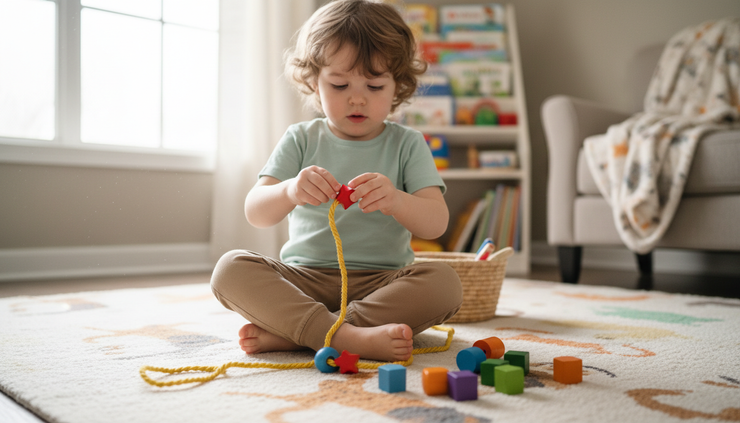
Fine motor skills support everyday independence
Fine motor skills help children manage daily tasks that make them feel capable. A 3-year-old may start by pulling up a zip with help. A 5-year-old may button a shirt, pour water from a small jug, or peel a banana. These small wins matter because they give children a sense of control over their own bodies and routines.
Self-care tasks often include many tiny movements. Dressing requires pulling, pushing, pinching, and coordinating both hands. Eating with a spoon or fork asks a child to balance grip, wrist movement, and mouth-hand coordination. Brushing teeth involves holding a brush, moving it in different directions, and keeping attention on the task.
When adults rush these tasks, children miss chances to practise. Of course, busy mornings are real, especially before school. Yet even one or two small moments each day can help. A child can fasten one button while an adult does the rest. Another child can carry a small tiffin box, open a simple lid, or place shoes in the right spot.
These moments build more than hand strength. They support planning, patience, and problem-solving. A child learns, “If I hold the cloth here and pull there, it works.” That kind of thinking carries into play and learning.
Common everyday tasks that build fine motor control include:
Buttoning and zipping clothes These actions build finger strength and bilateral coordination, which means using both hands together.
Opening lunch boxes and snack containers Twisting, lifting, and pulling lids prepare children for practical independence at preschool or school.
Using a spoon, fork, or small cup Mealtime gives repeated practice in grip, wrist control, balance, and hand-eye coordination.
Brushing teeth and combing hair These habits build controlled arm and hand movements while improving body awareness.
Fine motor practice works best when it feels natural. A child does not need a special lesson to build these skills. Daily life already offers enough opportunities.
The ages from 3 to 6 are a key period for hand control
Children aged 3 to 6 make big changes in how they use their hands. Their movements become more precise. Their grip improves. They begin to use tools with more purpose. They also start to show a stronger preference for one hand, although some children take longer to settle into a dominant hand.
At around 3 years, many children enjoy stacking blocks, turning pages, scribbling, placing large puzzle pieces, and feeding themselves with increasing control. Their drawings may be simple marks, lines, and circles. Scissors can be difficult, but they may begin snipping paper with help.
By 4 years, children often show better control. They may copy simple shapes, roll play dough into balls or snakes, use chunky crayons, and manage larger buttons. They may also enjoy tearing paper, pasting, sorting objects, and building more detailed block structures.
By 5 to 6 years, many children can draw with more detail, cut along simple lines, write some letters, colour within larger spaces, and complete multi-step craft activities. They may also handle school tools like pencils, erasers, glue sticks, sharpeners, and lunch containers with more confidence.
These age markers are general. They are not a strict checklist. A child who dislikes colouring may still have strong fine motor skills from building blocks or helping in the kitchen. Another child may love drawing but struggle with zips or buttons. Development is broad, and looking at the full picture helps.
What matters most is steady progress. A child should gradually gain control, strength, coordination, and confidence. When practice feels playful, children usually stay engaged longer.

Fine motor skills prepare children for early learning
Many early school tasks depend on fine motor control. Holding a pencil, drawing lines, using an eraser, turning workbook pages, cutting paper, pasting shapes, and packing a school bag all need coordinated hand movement. When these skills are still developing, children may find classroom routines tiring.
This does not mean children need to write early or practise worksheets for long periods. In fact, too much formal writing before the hand is ready can lead to frustration. Before neat handwriting comes strength, stability, and control.
A child needs several body skills before writing becomes easier:
Shoulder and arm stability The larger muscles help keep the arm steady while the fingers move.
Wrist control A stable wrist supports a comfortable pencil grip.
Finger strength Strong fingers help children hold tools without pressing too hard or tiring quickly.
Hand-eye coordination The eyes guide the hand while drawing, cutting, tracing, or placing objects.
Bilateral coordination One hand may hold the paper while the other hand cuts or draws.
Play builds these foundations. Block play strengthens the hands and teaches spatial thinking. Clay and dough improve finger strength. Threading beads supports attention and coordination. Tearing paper builds grip. Drawing on vertical surfaces, such as a blackboard or paper taped to a wall, helps shoulder stability.
Fine motor work also supports early maths and language. Sorting seeds, shells, buttons, or blocks builds comparison and classification skills. Puzzles develop visual thinking. Drawing gives children a way to express stories before they can write words. Even turning pages of a picture book helps children understand sequence and direction.
The goal is not perfect handwriting at age 4. The goal is a child who can explore, handle tools, solve small problems, and keep trying.
A child who has had plenty of hands-on practice often enters formal learning with more ease. They can focus on the idea, not just the effort of holding the pencil or managing the paper.
Play is the best way to build fine motor strength
Young children learn best through play, movement, and real objects. Fine motor practice should feel like exploration, not pressure. The best activities are simple, repeatable, and open-ended.
Home and classroom activities can use everyday materials. A bowl of rajma beans for scooping, large buttons for sorting, old newspapers for tearing, cloth pegs for clipping, and safe kitchen tools for pretend play can all support hand development. Adult supervision is needed for small objects, especially with younger children who may put things in their mouth.
Strong fine motor activities often include pinching, squeezing, rolling, threading, twisting, placing, and cutting. They also let children make choices. A child who chooses the colour of beads, the shape of paper, or the pretend food in a play kitchen is more likely to stay interested.
Helpful activities for ages 3 to 6 include:
Play dough and clay work Rolling, squeezing, flattening, pinching, and cutting dough build hand strength.
Threading and lacing Large beads, pasta tubes, or lacing cards build coordination and concentration.
Drawing and colouring with varied tools Thick crayons, chalk, paintbrushes, and short pencils all support different grips.
Paper tearing and pasting Tearing strips, making collages, and using glue sticks build finger control.
Using tongs, spoons, and droppers Moving cotton balls, pom-poms, or water droplets improves precision.
Building with blocks and interlocking pieces Children practise pressure, alignment, planning, and two-hand coordination.
Safe kitchen participation Peeling boiled potatoes, rolling chapati dough with help, shelling peas, or stirring batter can build practical skills.
Outdoor play matters too. Climbing, crawling, digging, pouring sand, and carrying small buckets strengthen the larger muscles that support fine motor control. Hand strength does not develop only at the table. The whole body plays a role.

Adults can support progress without pressure
Support does not mean correcting every grip or finishing every task for the child. It means creating chances to practise and offering help only when needed. Children gain confidence when adults give them time.
A useful approach is to break tasks into small steps. If a child struggles to button a shirt, start with large buttons on a dressing frame or an old shirt placed on the table. Once the movement becomes easier, try it while the child is wearing the shirt. If cutting paper is difficult, begin with snipping play dough or cutting thick paper strips before moving to curved lines.
Praise effort and strategy, not only the result. Saying, “You kept trying until the bead went through,” helps a child notice persistence. Saying, “Your drawing is perfect,” may make the child worry about mistakes. Fine motor growth needs trial and error.
The environment also matters. Tools should fit the child’s hand. Very thin pencils may be hard for some young children. Very large scissors may be unsafe or awkward. Child-sized scissors, thick crayons, low tables, and stable seating can make practice easier.
Good seating helps more than many people realise. When a child’s feet are supported and the table is at a comfortable height, the hands can work better. If the body is wobbling, the fingers have to work harder.
Screen time cannot replace hands-on play. Touchscreens involve tapping and swiping, but they do not offer the same resistance, texture, grip changes, or two-hand coordination as real materials. Digital activities may have a place in some homes, but children still need clay, paper, blocks, sand, water, fabric, and tools.
Some children need extra support. A child may benefit from a discussion with a paediatrician, preschool teacher, or occupational therapist if they:
Avoid most hand activities for a long time
Struggle greatly with feeding tools after repeated practice
Seem unusually frustrated by dressing tasks
Cannot manage simple puzzles or blocks expected for their age
Have very weak grip or tire quickly during hand tasks
Use one side of the body much less than the other
Lose skills they previously had
This post is for general information and does not replace professional advice. If a concern feels persistent, early guidance can help. Support is not about labelling a child. It is about understanding what the child needs to participate more fully.

The real value is confidence in small moments
The importance of fine motor skills in the development of children aged 3 to 6 years shows up in ordinary scenes. A child opens a snack box without help. A child draws a person with eyes and legs. A child turns the pages of a favourite storybook carefully. A child tries again when the puzzle piece does not fit.
These moments are small, but they shape how children see themselves. Fine motor skills support independence, school readiness, play, self-expression, and participation in family life. They also teach patience. Hands learn through repetition, and children learn that practice changes what they can do.
The best support is simple. Offer real materials. Make time for self-care tasks. Let play be messy within safe limits. Keep expectations age-appropriate. Celebrate effort. Watch for steady progress rather than perfect results.
A child’s hands are tools for learning the world. When those hands grow stronger and more coordinated, the child gains more than skill. They gain confidence to explore, create, and take part in daily life with growing independence.


Comments